Index separations print a photograph with square dots that are all the same size. Instead of a halftone, where dots grow and shrink, each spot on the print is one ink or another. Mix enough inks in a fine enough pattern and the eye reads continuous color.
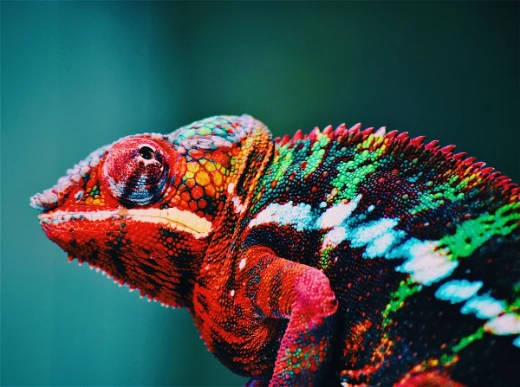
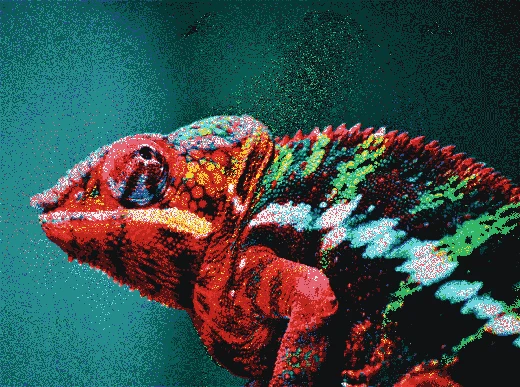
How index differs from a halftone
| Halftone (sim process, CMYK) | Index | |
|---|---|---|
| Dots | Round or shaped, size varies | Square, all one size |
| Angles | One per screen | None |
| Moiré | Possible, managed with angles | None |
| Tone | Dot size | How many cells get the ink |
| Registration | Tight | Forgiving |
Because there are no angles, nothing beats against the mesh and there is no moiré, ever. A slip of one screen moves a scatter of square dots, which hides far better than a misregistered halftone.
When to use it
- A manual press, or a press that drifts. Index forgives registration.
- More inks than the art strictly needs. Each extra ink buys smoother color.
- Photos on dark shirts where you want no moiré risk at all.
When not to
- Art that fades into the shirt. An index cell is all ink or none, so a soft fade becomes a grainy edge.
- Few screens. Index usually needs more inks than sim process to look smooth.
- Very coarse mesh. A mesh that lays down a heavy deposit squashes the square dots into each other and loses the crisp cells index depends on.
Dot size and mesh
The dot size is set as a pitch in dots per inch rather than a ruling. 180 dpi suits 230 to 305 mesh. Coarser mesh needs a coarser pitch. Test it on your own mesh before a run, the same way you would test a halftone ruling. See find your printable dot range.
The underbase on an index job
On a dark shirt the white goes under every dot of every ink. That costs nothing extra: a cell is solid ink or bare shirt, so there is no gap for white to show in. The white is then choked back from the outer edge like any underbase. See white underbase for dark shirts.
In Halftoned
Index is one of the four separation methods in Studio. Pick the inks, set the dot size and the scatter (how fine or soft the dither's grain is), and the films come out with square dots, no angles and the underbase built from every dot. The proof shows the dither over the shirt color. See which separation to use, the preview or the pricing.